
The following is an op-ed piece written by our Executive Director, Jennifer Paradis.
The entire article can be viewed here, on Hearst Media, The Connecticut Post, or other news outlets directly if you have a subscription.
The text is also copied below…
Homelessness is growing. Why isn’t our response?
BY JENNIFER PARADIS
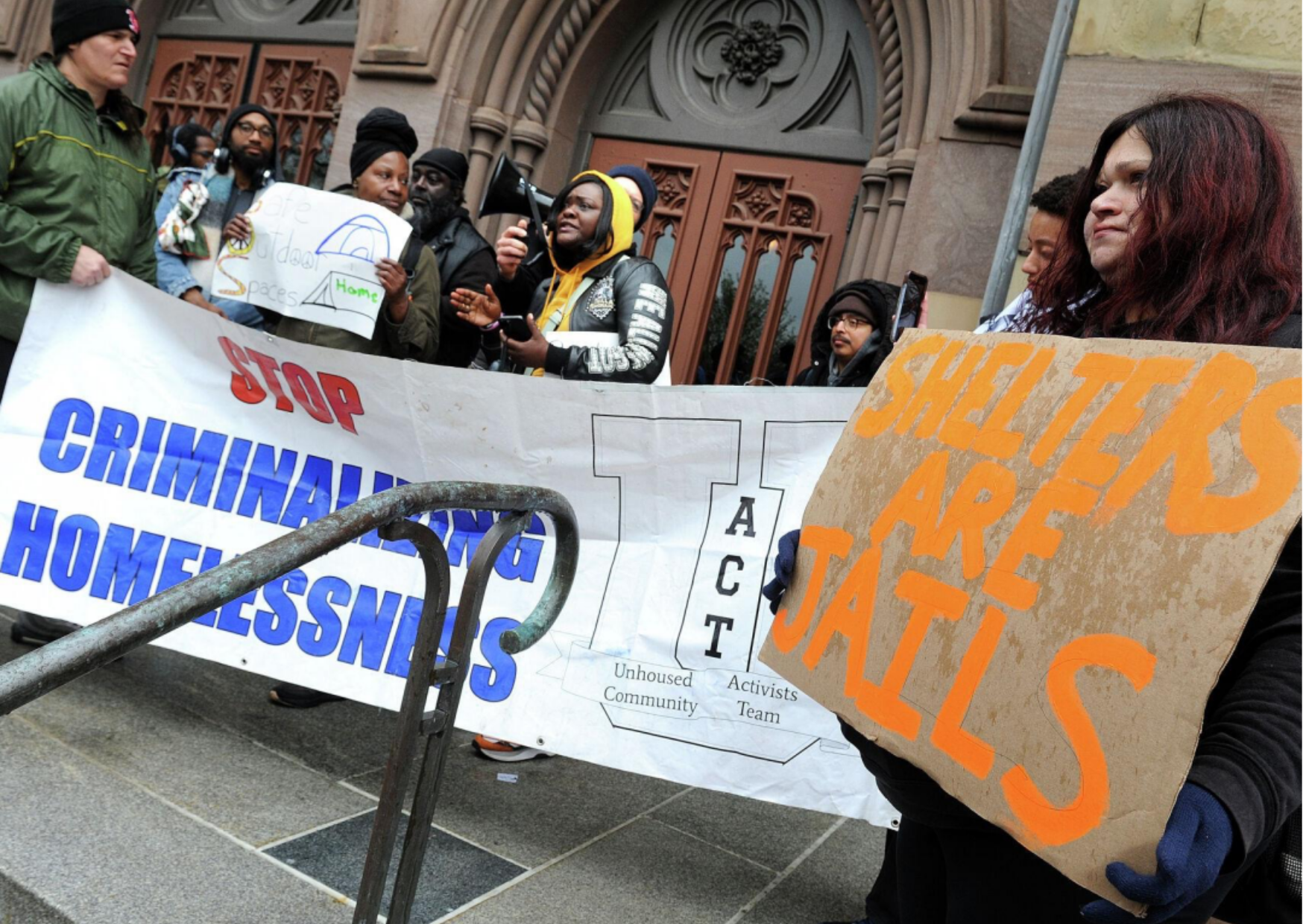
Homeless individuals and advocates rally on the steps of City Hall in New Haven on April 22 following the closure of the city’s emergency shelters for the winter season.
I’ve been worried about this moment for a while. We are reaching the point at which communities can no longer tolerate the impact of more people becoming homeless. I can’t think of anything that should be more unifying than housing, particularly as more people lose access to any housing at all, but chronic underfunding of the homeless response system, fear, mis-education and greed lead us to look at one another as problems rather than neighbors.
Through all of the challenges we face in life, it is those who face them while unhoused that continue to be our most vulnerable neighbors, and this diverse community of individuals and families continues to grow. Unless you have a personal or professional relationship with someone experiencing homelessness, it may be difficult to understand how close we all are to it. It could happen quickly, through a disaster like a house fire, or more slowly, through economic hardship. It’s not only the loss of employment that leads to homelessness — even those with steady employment can face it when many jobs today do not compensate well enough for housing stability.
In Connecticut, the average person would need to earn more than $28 per hour at a full-time job to afford a one-bedroom apartment. For those earners making less than this hourly rate, housing becomes even more unaffordable and unavailable. For every $100 increase in average monthly rent, homelessness increases by 9%. Rents have increased by 24% since 2019. This leads to more Connecticut residents experiencing homelessness for the first time, with older adults (55-plus) being the fastest growing demographic. Connecticut’s homeless response system cannot currently prevent, shelter, or permanently house people quickly enough to keep pace with demand. As a result, unsheltered homelessness continues to grow across towns and cities, turning access to basic necessities like shelter into a lottery. In Greater New Haven alone, more than 500 people are sleeping outdoors because there are not enough places indoors for them to be. It is not a choice. About 100 neighbors are experiencing unsheltered homelessness in Milford. They want to come inside but end up waiting 4-5 months for shelter.
Meanwhile, encampments grow, and community tensions grow with them. Public spaces are used for leisure and survival. Neighbors who were extremely vulnerable in our housing market—especially older adults and people living with disabilities — become homeless and now live outdoors with nowhere to go. While housing ends homelessness and shelter saves lives, prioritizing these needs through existing resources like public housing or building conversions is framed as too expensive or against public will, and so real solutions are traded for harmful interventions.
Ordinances banning activities such as sleeping outdoors do nothing to reduce homelessness. Fines, tickets and arrests create a criminal record that makes it significantly more difficult for individuals to maintain or secure employment, find housing and access social services. These measures make the work of homeless outreach and emergency shelter services significantly harder. Encampment raids or even more passive “move along” tactics often result in the destruction or loss of personal property, including identification, medication, and survival gear like tents and blankets. These tactics also disrupt connections with outreach workers, leading to delays in people getting housed.
The act of criminalizing homelessness does something even more damaging to our social morality. It forces individuals further into social isolation through public shame. Hostile architecture and efforts to segregate public spaces create a new division in our communities, with those who have lost the most suffering the greatest. This is not another moment to call for patience while services work. We ask for your partnership and equal sense of urgency in ensuring that effective housing-first strategies are made immediately available for every person who needs help. In plain words, help us advocate for more shelter resources, more permanent housing support, and work with us to ensure homelessness is prevented whenever possible.
There are many reasons why reducing homelessness is desirable for communities. It’s the most cost-effective intervention. Not resolving homelessness leads to more frequent and longer hospital stays, more police engagement, and mounting municipal costs related to mitigation strategies rather than permanent solutions. It is also a public health and safety concern for those being forced to live outdoors under changing and severe weather conditions, through aggressive tick seasons, and with little access to necessary resources like bathrooms and kitchens.
It is possible and necessary to work together to ensure our community meets all of our needs, and we have no time to waste. The emergency for many living outdoors is tonight, and every night.
Jennifer Paradis has been the executive director of the Beth El Center in Milford, since 2018, is co-chair of the CT CAN End Homelessness Campaign Steering Committee and a person with lived experience of homelessness